How We Cleared a Storm-Toppled Oak From a Larchmont Driveway in One Morning
A March nor'easter dropped a 70-foot oak across a Larchmont driveway. Here's how our crew cleared it safely and documented the damage for the homeowner's insurance claim.
The Call
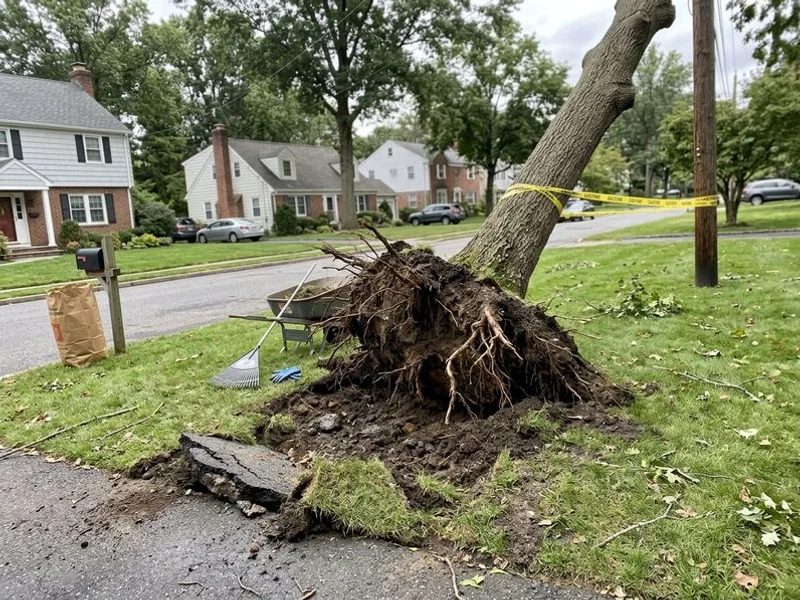
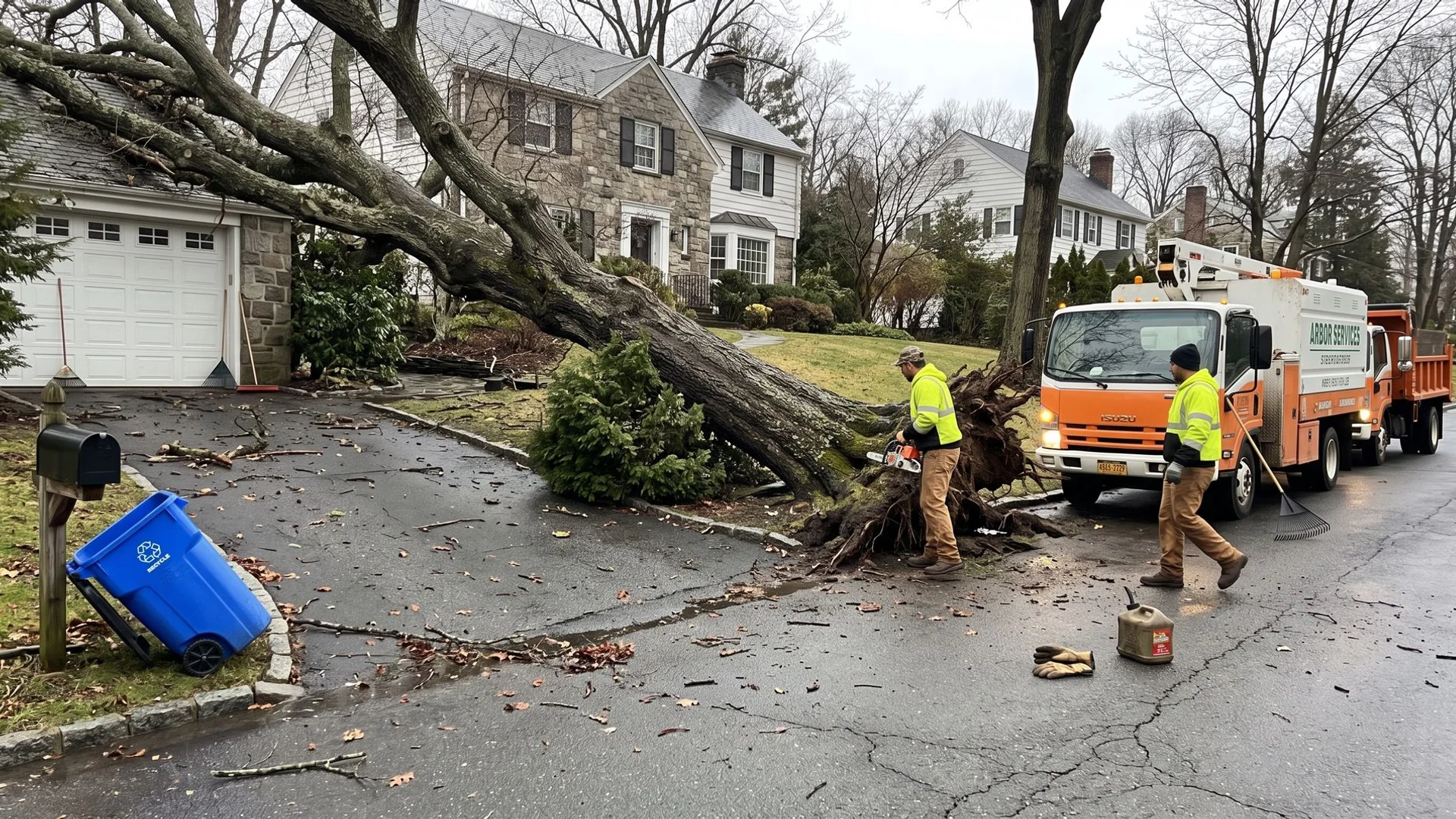
At 6:14am on a raw March morning, our dispatch line rang. A homeowner in Larchmont Manor had woken up to find a 70-foot red oak lying across her driveway, blocking the garage and pinning a corner of her fence. The nor’easter that had rolled through the Long Island Sound the night before had 55 mph gusts and left the tree’s shallow root plate lifted right out of the saturated ground.
She wasn’t hurt. No one was inside a vehicle. But she had a meeting she needed to drive to at 10am, and she wanted to know two things — could we clear it, and would her insurance cover it.
On Site by 8:15am
Our crew was rolling by 6:45am. Larchmont’s a short drive from Rye Brook, and even during storm surges we prioritize dispatch by hazard — driveway blockages that keep a homeowner stuck in the house get moved up the list. By 8:15am we had two crew members on scene, bucket truck, chainsaws, chipper.
The tree had come down cleanly across the driveway. No power lines involved. No structural damage to the house — a scraped corner on the garage siding, some fence panels crushed, some crushed hostas we’d have to add to the report.
The Work
Before touching anything, we photographed the scene from four angles. Dated timestamps on every shot. Then Christina, our operations manager, printed a preliminary itemized estimate on the truck’s field printer and handed it to the homeowner so she’d have documentation before we made the first cut.
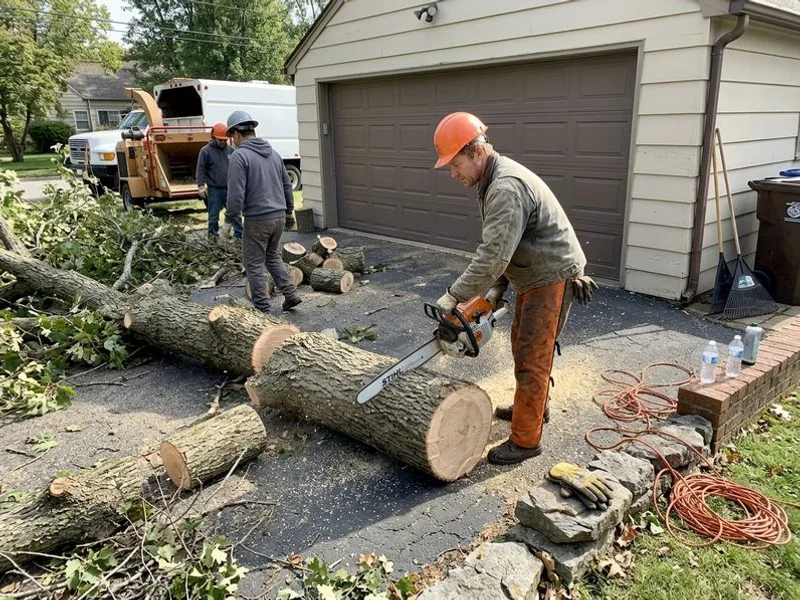
Sectioning a downed oak of that size isn’t complicated when it’s on the ground with no lean or tension — the risk is in the pieces already on the ground shifting when you make the next cut. We rigged a small anchor to hold the crown steady, sectioned the trunk into 3-foot chunks starting from the top, chipped what fit, hauled the rest.
By 11:20am the driveway was clear. Chipper ran another 40 minutes on the crown wood. Total on-site time: 3 hours 5 minutes.
The Insurance Claim
The homeowner filed with her insurance carrier at lunch and had a claim number by 3pm the same day. Our documentation package — dated photos, itemized invoice, damage description on our letterhead — went to the adjuster the next morning. Claim approved for full cleanup plus fence repair within a week.
What This Storm Taught Us
Larchmont’s coastal exposure and saturated spring ground make root-plate failures the most common storm removal we handle. When the ground is soft and the wind lifts hard against a heavy canopy, even healthy trees can go over. Storm-prep pruning to reduce wind load helps — but sometimes the ground itself is the failure point.
If you have a large tree with a history of leaning or with visible root heave, get an assessment before the next nor’easter. If a tree has already come down, call us at 914-907-4131. We’re 24/7 and we bring the paperwork.