Dynamic Cabling vs. Rigid Steel Bracing
Dynamic cables allow natural tree movement; rigid steel rods fix split unions. Compare the two tree support systems, when each is used, and inspection needs.
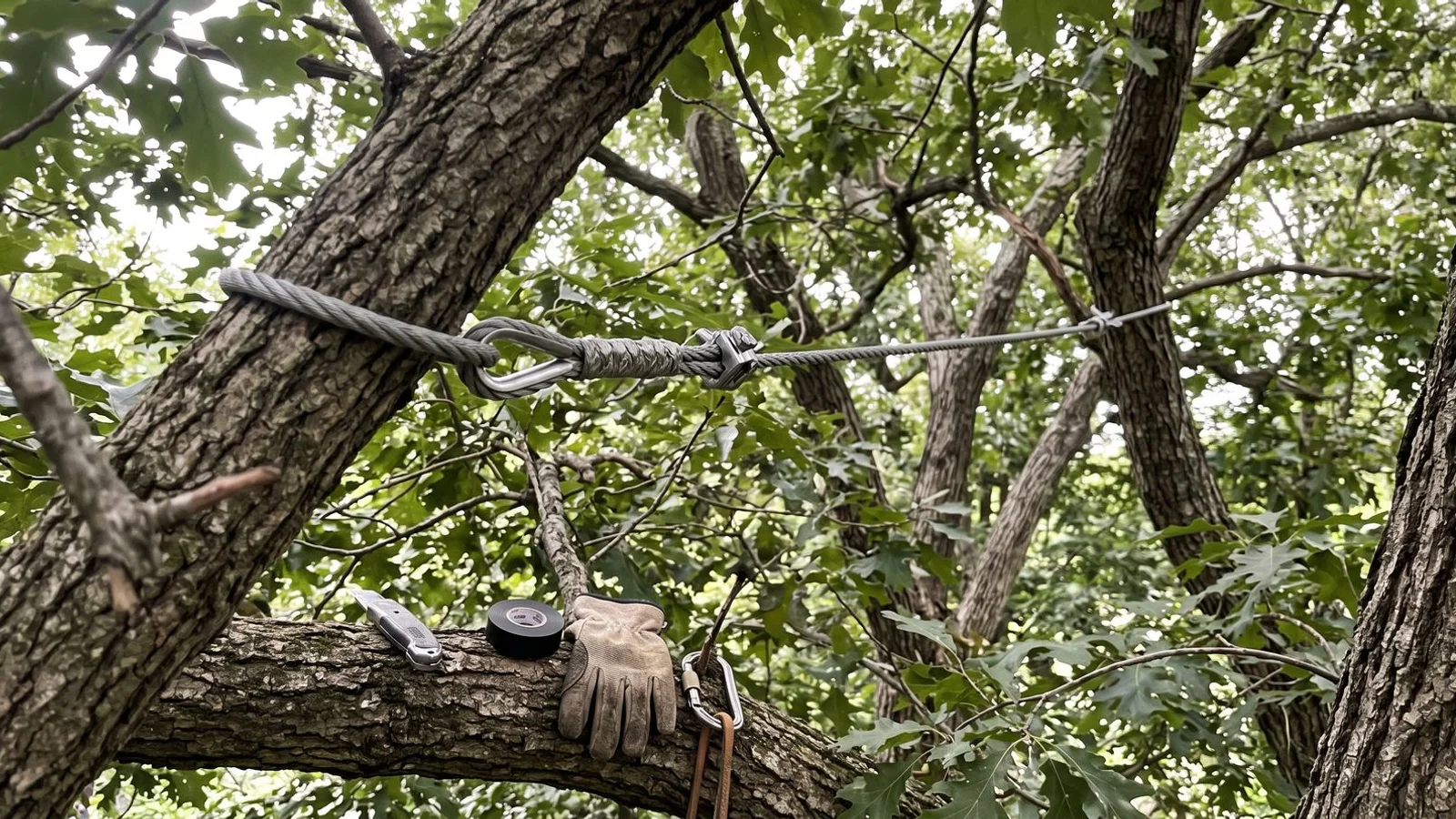
Deciding between dynamic cabling vs steel bracing can mean the difference between saving a landmark tree and scheduling a costly removal. We often see property owners struggling with a splitting heritage oak or maple, unsure of which structural support method will actually work.
Modern tree biomechanics dictate a different approach than the old standard of just bolting everything together. Our arborists evaluate the specific structural defect in the canopy before recommending a support system.
This guide covers everything you need to know about tree cabling types and dynamic vs static tree support. We will break down these two support systems, look at 2026 cost data, and explore exactly which solution makes sense for your property.
Dynamic Cabling
What it is: A high-strength synthetic cable installed between two leaders or limbs, typically in the upper third of the canopy. We use these non-invasive systems to provide support without drilling into the wood.
How it works: This system allows natural wind movement while limiting how far weak points can spread. Our installations ensure the tree still moves, which is the flexibility that keeps healthy trees strong. The cable simply prevents catastrophic separation when a storm hits.
Common materials:
- Cobra Cabling System (proprietary 18mm braided polypropylene with a 4-ton breaking load).
- Various extra-high-strength (EHS) cables, sized per ANSI A300 Part 3 specifications.
- Shock absorbers integrated into the synthetic rope to handle sudden wind gusts.
Best for:
- Co-dominant leaders with V-shaped splits.
- Weak unions with included bark.
- Preventive support on high-value specimen trees.
- Trees where preserving natural movement matters for root development.
Inspection cadence: Every 1 to 2 years for tension and hardware integrity. We typically adjust synthetic cables during these visits to accommodate new canopy growth.
Rigid Steel Bracing
What it is: Threaded steel rods installed directly through a trunk union or across an active split. Our crews rely on this method when a tree requires absolute structural immobilization at a specific weak point.
How it works: The hardware rigidly holds the union together, allowing zero give or flex at the braced point. We install these rods to ensure the compromised wood stays permanently secure. The tree can still move at the upper canopy, but the split trunk remains completely locked in place.
Common hardware:
- Threaded steel rods, typically 1/2-inch or 5/8-inch in diameter.
- Heavy-duty end plates or washers.
- Hot-galvanized low-carbon steel or stainless steel for maximum weather resistance.
- Hardware rated for 10,000 to 16,000 pounds of tensile strength.
Best for:
- Actively splitting unions.
- Trees where a synthetic cable alone lacks sufficient holding power.
- Larger, heavy unions carrying high structural loads.
- Post-split preservation efforts.
Inspection cadence: Every 1 to 2 years for hardware integrity and tensioning. Our arborists may recommend longer intervals in stable conditions once the wound seals around the exterior plates.
When Trees Need Both
Many preservation cases require a combination of dynamic cabling and steel bracing to save the tree. We frequently install these dual systems on massive estate oaks with weak unions that have already started to fail. Relying on just one method for a massive canopy is rarely enough to ensure safety. Our certified experts design these combined setups to distribute the physical forces evenly across the structure.
- Bracing at the split holds the main union rigidly together to stop the crack from spreading.
- Cabling above supports the leaders, significantly reducing the wind load on the lower brace.
- Combined support provides crucial redundancy, ensuring that if one element experiences extreme stress, the other continues to protect the tree.
These hybrid installations represent standard practice for large heritage trees across the US. We find that distributing the support points extends the life of mature specimens by decades. ANSI A300 Part 3 guidelines specifically dictate that lower rods should be paired with upper cables for heavy co-dominant stems.
Installation Considerations
Every property presents unique access challenges and biological factors. Our team evaluates these specific conditions before selecting a support strategy.
Dynamic cabling:
- Installed high in the canopy, usually in the upper third of the tree.
- Requires professional climbing or bucket-truck access.
- Involves a multi-hour installation process using specialized splicing tools.
- Remains less visible from the ground, preserving the natural landscape aesthetic.
Steel bracing:
- Requires precision drilling straight through the trunk union.
- Drill bits must be sized 1/16 to 1/8 inch smaller than the rod diameter for a secure tight fit.
- Creates an intentional wound that the tree must actively heal over time.
- Leaves hardware visibly exposed on the lower trunk section.
Proper hygiene is a critical step in any invasive bracing procedure. We always sanitize our auger bits between trees to prevent the spread of fungal diseases.
Longevity
Both systems represent a long-term investment in your property, but they do not last forever. Our maintenance records show that material degradation varies heavily based on UV exposure and wind frequency.
- Dynamic cables: 15 to 25 years for good hardware, requiring periodic tension adjustments. Synthetic options like Cobra ropes carry a strict manufacturer service life of 12 years before UV breakdown requires full replacement.
- Steel bracing: 20 to 30 years or more, as the galvanized hardware often outlasts the tree itself.
Both solutions demand periodic visual inspections. We check cabling systems to ensure they adjust properly as the tree adds new wood. Bracing hardware acts more as a set-and-forget installation once the initial healing finishes.
ANSI A300 Compliance
Both systems, when done properly, follow ANSI A300 Part 3, the US industry standard for tree support systems. Our installations adhere strictly to these guidelines because non-standard setups can fail unexpectedly and cause severe property damage.
Standards cover:
- Hardware specification and load limits.
- Installation technique and exact placement ratios, such as placing cables at least two-thirds up the branch length.
- Inspection cadence and maintenance schedules.
- Load calculations based on canopy weight and wind exposure.
Property owners should verify that their contractor understands these specific civil court-recognized benchmarks. We refuse to compromise on these mandatory safety protocols during any installation.
Cost
Pricing for 2026 reflects the specialized hardware and the required expertise of certified professionals. Our estimates always factor in the specific height, accessibility, and material requirements of the individual tree.
- Dynamic cabling: $300 to $1,000 per tree depending on canopy complexity.
- Steel bracing: $400 to $1,500 depending on rod thickness and drilling difficulty.
- Combined system: $700 to $2,500 for comprehensive, multi-point support.
- Annual inspection: $100 to $300 per visit to check tension and structural healing.
Investing in these support mechanisms is significantly cheaper than a $3,000 emergency tree removal. We provide detailed written quotes so property owners know exactly what hardware is being used.
Decision Framework: Dynamic Cabling vs Steel Bracing
Choosing the best path forward comes down to evaluating the severity of the structural defect. Our risk assessments categorize trees to match them with the most effective intervention.
- Simple co-dominant leader with no split: Dynamic synthetic cable.
- Weak union with active or existing split: Rigid steel bracing, usually paired with a cable above for leverage.
- Multiple issues on the same tree: A fully combined system to address wind sway and trunk splitting simultaneously.
- High-value historic specimen: A combined system backed by rigorous annual maintenance protocols.
An arborist assessment determines the right combination for your specific tree. We use these comprehensive evaluations to catch minor structural flaws before they turn into major property hazards.
Understanding the differences between dynamic cabling vs steel bracing helps you make smarter decisions about your landscape. Our team is ready to answer your questions and install the exact support system required for your situation. Schedule a site visit today to protect your mature trees from future storm damage.
Related: tree cabling and bracing service, can cabling save a tree, tree health assessment.