Signs a Tree Is Dangerous and Needs Removal
Leaning trunks, cracks, hollow cavities, root heave, and proximity to structures — the warning signs your tree is hazardous and how urgently to act.
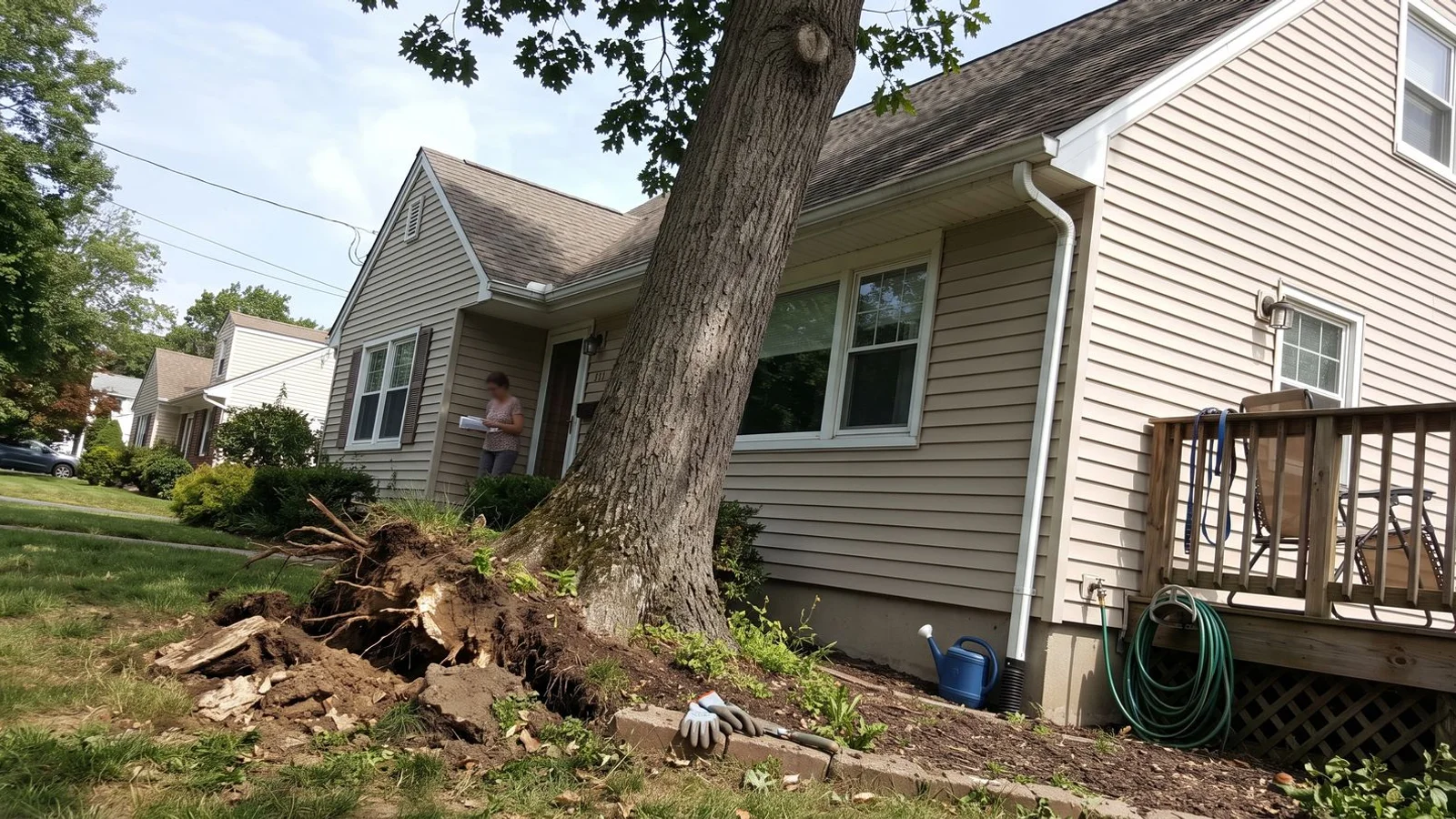
We hear the same question every time heavy winds roll through the US: is my tree dangerous?
That is a fair concern, especially since healthy-looking canopies can easily hide deep structural flaws. According to recent 2026 national data, standard tree removal averages around $850, but emergency crane jobs can quickly spike over $2,500.
We want to help you avoid those emergency costs by catching issues early.
Let’s walk through the exact warning signs to look for, explain the structural defects that matter most, and clarify exactly when to schedule an assessment.
Warning Signs by Severity
Spotting dangerous tree signs early requires knowing which symptoms demand immediate action and which just need monitoring. We classify these warning signs into three distinct urgency levels to help homeowners and business owners prioritize their response.
Urgent: Call Today
Immediate hazards usually involve sudden changes to the tree’s physical stability. We always treat a fresh crack in the trunk that you can put your fingers into as a critical emergency. A sudden new lean, especially when checked against neighbors’ trees for reference, is another major red flag.
- Soil heave on the opposite side of a lean indicates catastrophic root failure.
- Large hanging or broken limbs after a storm are severe dropping hazards.
- A tree in contact with power lines poses immediate fire and shock risks.
- A root plate visibly lifted from the ground means the anchor system is broken.
These issues often lead to property damage during wind gusts exceeding 40 mph. Our team recommends staying entirely clear of the drop zone until a professional arrives.
Soon: Book an Assessment This Month
Not every defect causes an immediate collapse, but slow decline requires professional documentation. Progressive canopy dieback over several months often points to systemic issues beneath the soil.
- Fungus fruiting bodies on the trunk or root flare, like Armillaria root rot, signal internal wood decay.
- A hollow-sounding cavity when tapped with a hammer means structural wood is missing.
- Multiple large deadwood branches create a significant dropping risk.
- An old crack that is expanding shows the tree can no longer support its own weight.
We suggest booking a local assessment within a few weeks if you spot these symptoms. Acting during this window allows you to explore mitigation options before complete removal becomes the only choice.
Watch: Monitor and Reassess in a Season
Some trees live for decades with minor imperfections. A slow decline in vigor or small deadwood branches simply require seasonal observation.
- A historical lean that hasn’t changed is often perfectly safe.
- Minor bark loss without exposed wood usually heals on its own.
We advise taking photos from the same angle every few months to track any subtle shifts. This simple habit creates a visual baseline that makes future evaluations much more accurate.
The Big Four Structural Defects
Understanding the main structural defects helps you identify exactly why a tree might fail. We focus our inspections on four specific areas of weakness that account for the vast majority of storm-related collapses in the US.
| Defect Type | Stable Condition (Monitor) | Dangerous Condition (Act Now) |
|---|---|---|
| Trunk Lean | Historical lean with corrective upper canopy growth | Sudden new lean with lifted soil |
| Trunk Cavity | Small opening with over 70% solid wood remaining | Hollow core leaving less than 33% sound wood |
| Branch Unions | U-shaped branch attachments | V-shaped unions with pinched included bark |
Leaning Trunk
A new leaning trunk is a glaring indicator of root failure or a significant shift in the soil. We always compare the angle of the suspect tree against nearby trees of similar species and age.
Old, stable leans where the tree has always grown that way are usually fine because the roots have adapted to the weight. New leans, however, demand immediate attention.
Cracks and Hollow Cavities
Vertical cracks in the trunk indicate active failure planes where the wood is splitting apart. Deep cavities reduce the overall structural wood volume, making the trunk highly susceptible to wind shear.
We follow a strict industry rule of thumb regarding internal decay. If less than a third of the trunk diameter is sound wood, the tree is structurally compromised and usually requires removal.
Root Heave
The anchor system of a tree is entirely underground, making surface clues incredibly important. Look at the base of the trunk to see if the soil is lifted on one side or if root plates are visible.
Root heave is often the immediate precursor to a complete collapse. We consider this a high-risk situation because the tree has literally lost its grip on the earth.
Weak Unions
Where two major limbs meet, included bark can create a severe splitting hazard. This happens when bark gets pinched between the limbs, preventing a solid wood-to-wood connection.
Common US species with co-dominant growth patterns, like maples, willows, and Bradford pears, are especially prone to this defect. We frequently see these weak unions snap during heavy ice storms or summer downdrafts.
Proximity Multiplies Risk
The physical condition of a tree is only half of the hazard equation, while the other half is what it might hit if it falls. We evaluate risk based on proximity to valuable targets, meaning a failing tree in an empty field is a minor nuisance, but that same tree over your roof is a major emergency.
The ANSI A300 Part 9 standard for tree risk assessment specifically requires professionals to identify and categorize these potential targets. Assess your property using this straightforward hierarchy:
- Target value: A house takes priority over a garage, which outranks a shed, fence, or open lawn.
- Occupancy: A kids’ play area or active driveway is much higher risk than a seldom-used side yard.
- Fall path: Consider the height of the tree and exactly where it would land if it failed at the base.
Recent 2026 data shows that residential property damage from falling trees routinely generates insurance claims between $4,000 and $10,000. We strongly advise homeowners to act quickly when a hazardous tree stands close to power lines. Utility contact can start fires, pose severe life-safety risks, and disrupt power for entire neighborhoods.
When to Call vs. When to Wait
Deciding whether to request immediate service or simply schedule a routine checkup depends entirely on the speed at which the tree is declining. We recommend calling for emergency help if you see sudden, drastic changes, while gradual issues can wait for a scheduled appointment. Knowing the difference saves you money and prevents unnecessary panic.
- Call now for: Any tree threatening a structure, power line, or driveway with immediate signs of failure. Fresh cracks, a new lean, or recent root heave mean the tree is actively failing and could drop at any moment.
- Book an assessment for: These issues include progressive decline signs or questionable structural defects. We also advise clients to book a professional inspection if they are planning to sell their house soon. Buyers frequently request an arborist report during the inspection period if they spot a hazardous tree in Westchester, and having proactive documentation keeps the transaction moving smoothly.
- Monitor for: Stable historical conditions that haven’t changed and do not threaten any valuable targets. If a tree has had the same slight lean for a decade and sits far from your house, it is usually safe to simply watch it.
What an Assessment Includes
A formal evaluation provides a documented, science-based conclusion about the exact safety level of your property’s canopy. We use industry-standard protocols during a certified arborist assessment to remove the guesswork and give you a clear, actionable plan.
The International Society of Arboriculture (ISA) sets strict guidelines for these inspections. Our process typically covers several vital diagnostic steps:
- A comprehensive visual inspection of the trunk, roots, and canopy.
- A physical sounding test on suspect areas using a specialized mallet to detect hollow spots.
- A thorough structural evaluation using the official TRAQ (Tree Risk Assessment Qualification) methodology.
- A formal written risk rating categorizing the hazard as low, moderate, high, or extreme.
- A specific recommendation to either monitor the tree, mitigate the risk via pruning or cabling, or proceed with a complete removal.
The standard fee for this diagnostic service is $150 to $500, depending heavily on the size and complexity of the tree. For obvious, critical emergencies where the tree must come down immediately to prevent disaster, we skip the diagnostic step entirely. Instead, our team will rapidly dispatch emergency service to secure the area, a process that averages between $1,500 and $2,500 based on 2026 industry pricing.
Bottom Line
Your intuition is often your best defense against potential property damage. We always tell clients that if a tree makes you uneasy every time the wind blows, it is time to get a professional opinion, especially if it sits near your house. The cost of a basic assessment is virtually nothing compared to the massive financial burden of a structural failure.
Do not wait for the next major storm to test the strength of a compromised trunk. Call our team at 914-907-4131 to schedule a thorough evaluation today. If the tree is already clearly failing, our guide on tree removal vs. saving the tree walks through how we make that call.