Filing a Tree-Damage Insurance Claim in Westchester
How to file a tree-damage insurance claim in Westchester: documentation crews provide, working with adjusters, what's typically covered, and timelines.
Overview
Most Westchester homeowners will file a tree-damage claim at some point — nor’easters, ice storms, and high-wind events are frequent enough that if you own the property long enough, it happens.
Here’s how the process works, what we provide, and what to expect from your carrier.
Step 1: Immediate Safety and Documentation
Before anything else — safety. Assume any nearby power lines are live. Don’t re-enter a damaged structure. Once you’re safe:
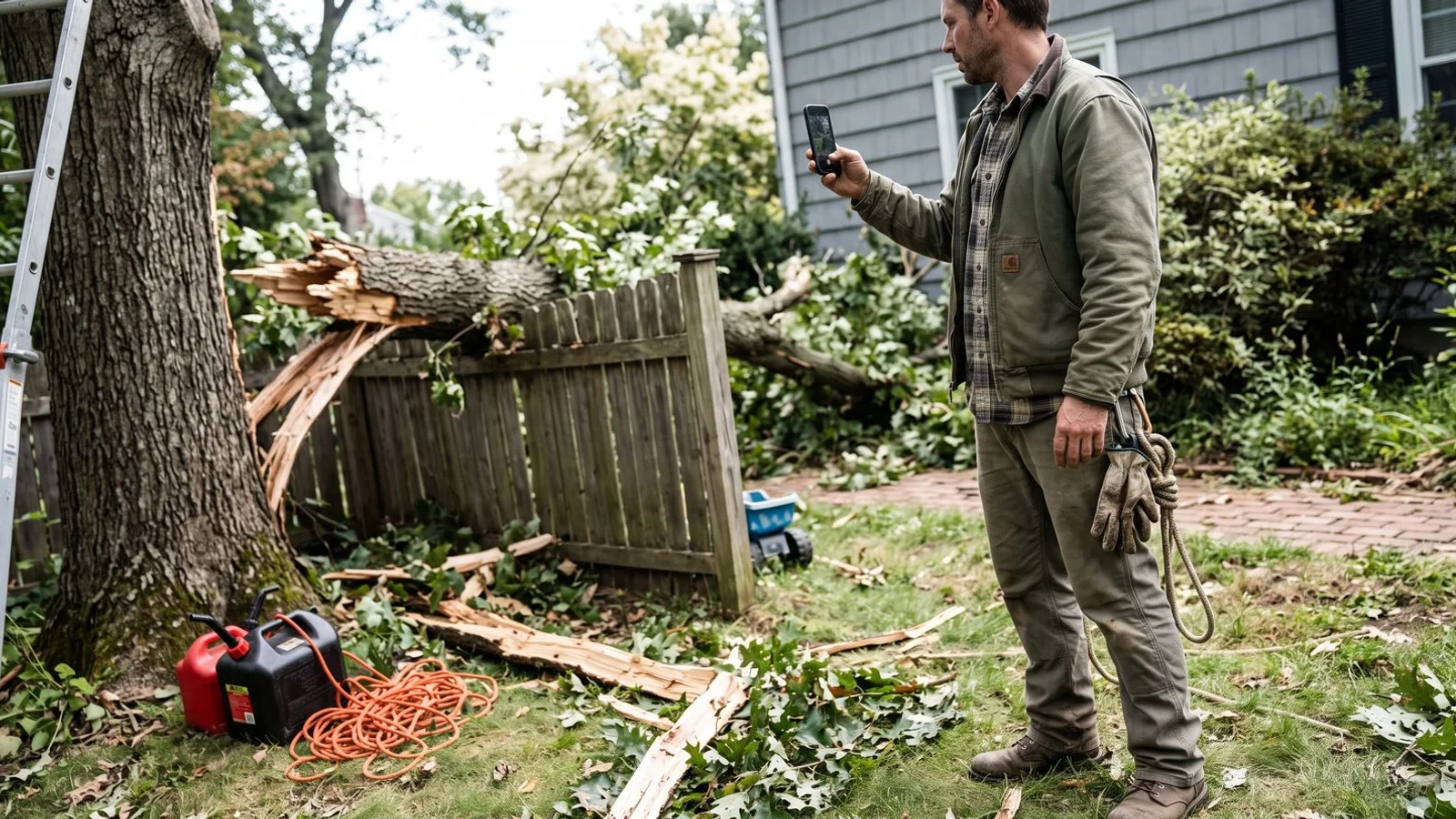
- Photograph the damage from multiple angles, before any cleanup
- Note the date and cause (nor’easter, wind event, ice)
- Photograph secondary damage — roof, fence, car, siding
- Photograph the tree in place — insurance may want to see it before removal
Step 2: Call Your Insurance Carrier
Most carriers have 24/7 claim lines. Open the claim before cleanup starts:
- Get your claim number
- Note the adjuster contact if assigned immediately
- Ask about temporary mitigation coverage (tarps, board-up) — usually reimbursed
- Get any specific documentation requirements they’ll want
Don’t dispose of the tree before checking with your adjuster. Some adjusters want to see it, others accept photos.
Step 3: Call Us
914-907-4131, 24/7. When we arrive we:
- Assess the hazard — utility involvement, structural stability
- Document extensively — photos before we start, from multiple angles
- Provide an itemized estimate — labor, equipment, cleanup, hauling
- Discuss timing — some carriers want us to hold on removal for adjuster inspection; usually not, since delay increases secondary damage
What We Provide for the Claim
Every storm job comes with a documentation package:
- Dated photos — before, during, after work
- Itemized invoice on our letterhead
- Damage description — cause, extent, tree species and size
- Scope of work — what we did, what we didn’t
- Coordination with your adjuster if you request it
Working with the Adjuster
Adjusters vary in how much they want to see:
- Some accept the documentation package and approve quickly
- Some send an adjuster to inspect in person
- Some want additional details (tree age, species, prior condition)
For anything unusual (large claim, disputed scope, tree from a neighbor’s property), the process takes longer. Being organized upfront speeds it up.
What’s Usually Covered
- Tree removal when it damaged a covered structure
- Tree removal when it blocked emergency access
- Debris removal and cleanup
- Temporary mitigation costs (tarps, board-up)
- Structural repair (separate contractor, separate claim item)
- Loss of use if the damage displaces you
What’s Usually Not Covered
- Preventive removal of a healthy standing tree
- Removal of a tree that fell in the yard without hitting anything
- Landscape replacement (some carriers cap this at very low amounts)
- Pre-existing structural issues on damaged buildings
- Trees that failed due to neglect or lack of maintenance (rare exclusion, but check)
Deductibles and Limits
You pay your deductible. On a $5,000 storm removal with a $1,000 deductible, insurance pays $4,000 and you pay $1,000.
Some policies also cap specific expenses (e.g., $500 per tree, $1,000 total tree removal). Read your declarations page.
Timeline
- Same day: claim opened, cleanup started
- 1–3 days: documentation to adjuster
- 1–2 weeks: adjuster review, potential inspection
- 2–4 weeks: approval and payment for straightforward claims
- Longer: disputed claims, unusual damage, coverage questions
Neighbor’s Tree, Your Property
If a tree from a neighbor’s yard fell into your driveway or on your house, in NY it’s usually your insurance that pays for cleanup on your property — not the neighbor’s. Exceptions exist for neglect (dead tree the neighbor knew was hazardous), but they’re hard to prove.
Bottom Line
Document. Call your carrier. Call us. We’ll make sure the paperwork is what adjusters need.
Related: does insurance cover tree removal, emergency tree service, storm damage cleanup.