Tree Trimming vs. Tree Pruning: What's the Difference?
Trimming shapes for appearance; pruning targets tree health and safety. Learn the difference, when each is used, and how to pick the right service.
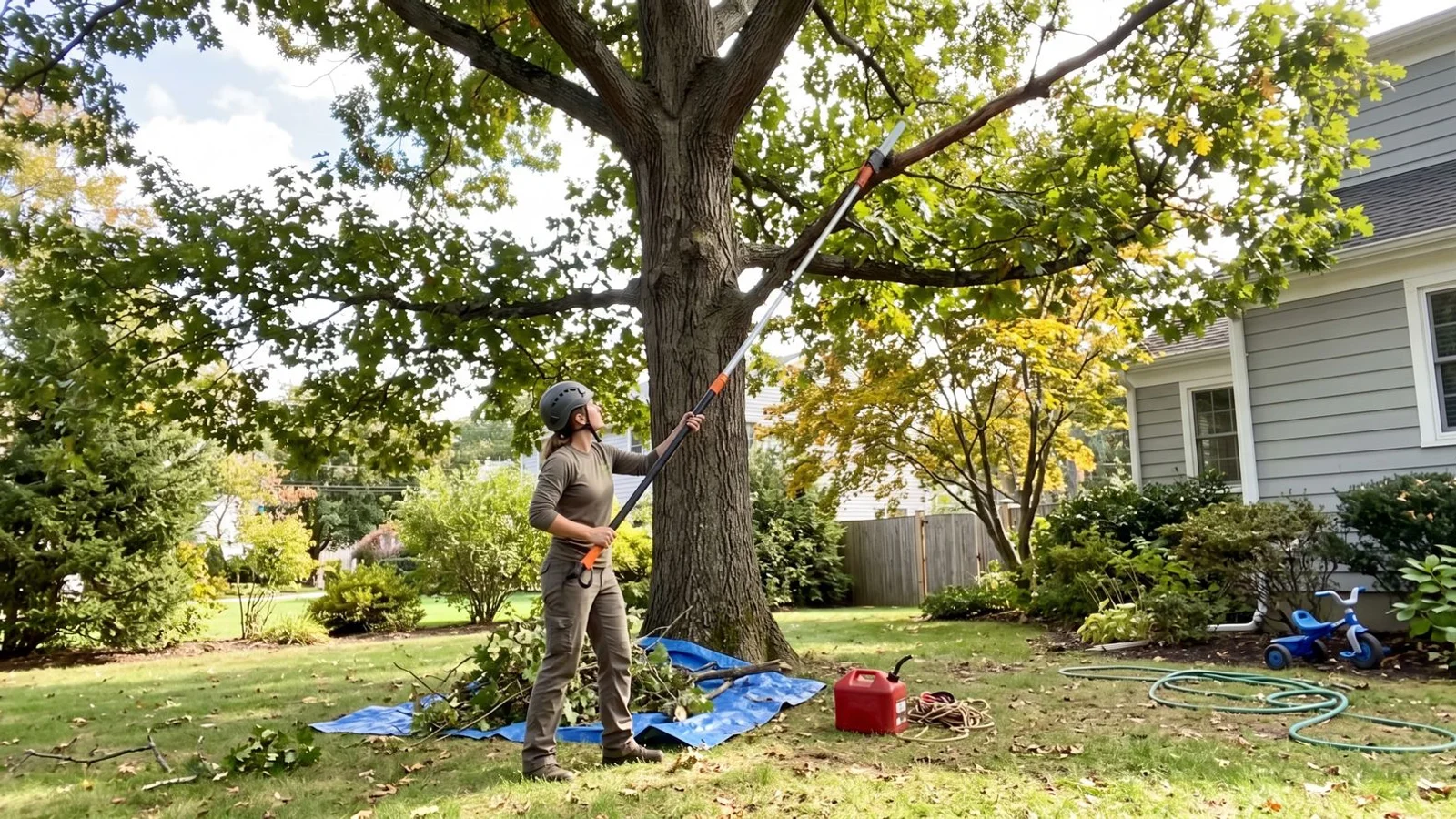
The Short Version
- Trimming = shaping for appearance (hedges, formal ornamentals)
- Pruning = health and safety cuts (deadwood, weak limbs, structural correction)
Same tools, different intent. Both done well use proper technique. Both done poorly damage trees.
When You Want Trimming
Trimming makes sense when:
- You have formal hedges that need shape
- Ornamental shrubs need annual shaping
- A tree has grown into a shape you don’t want
- You want a specific visual outcome
The goal is appearance. Technique matters less than the result.
See our shrub and hedge trimming service.
When You Want Pruning
Pruning makes sense when:
- The tree has visible deadwood
- Structural defects need correction (co-dominant leaders, weak unions)
- The canopy is too dense (wind load)
- Storm-prep is the goal
- The tree needs cleanup for health, not just looks
The goal is tree health, safety, and longevity. Technique matters a lot.
See our tree trimming and pruning service.
Why the Distinction Matters
Pruning done right (following ANSI A300 standards) heals cleanly and improves the tree. Pruning done wrong — flush cuts, over-thinning, topping — damages the tree, sometimes fatally.
Common mistakes we see from unqualified crews:
- “Topping” — cutting off the entire crown at a height. Kills or seriously damages most trees.
- Flush cuts at the trunk instead of at the branch collar. Prevents proper wound closure.
- Removing more than 25% of live foliage. Over-stresses the tree.
- Lion-tailing — stripping interior branches and leaving only tips. Actually increases failure risk.
Trimming a formal hedge is forgiving. Pruning a mature shade tree isn’t.
ANSI A300 Standards
Professional pruning follows ANSI A300 — the industry standard for tree care operations. Key principles:
- Cut at the branch collar, not flush with the trunk
- Remove no more than 25% of live foliage per visit
- Reduction cuts back to a lateral branch at least 1/3 the size of the removed section
- Understand the tree’s biology (CODIT — compartmentalization of decay in trees)
Our crews are trained in ANSI A300. It’s why the pruning we do promotes healthy healing rather than causing decline.
Common Combined Visits
Most residential visits combine both:
- Health pruning on the mature shade trees
- Trimming on the boundary hedges
- Shrub shaping around the foundation
One visit, one cleanup, one invoice. See how often to prune trees and how often to trim hedges for maintenance schedules.
To Get the Right Service
Tell us what you want the outcome to look like — not what you think the service should be called. “I want this hedge sharper” is trimming. “This oak looks unhealthy” is pruning (or possibly a health assessment).
For estimates: 914-907-4131 or contact form.