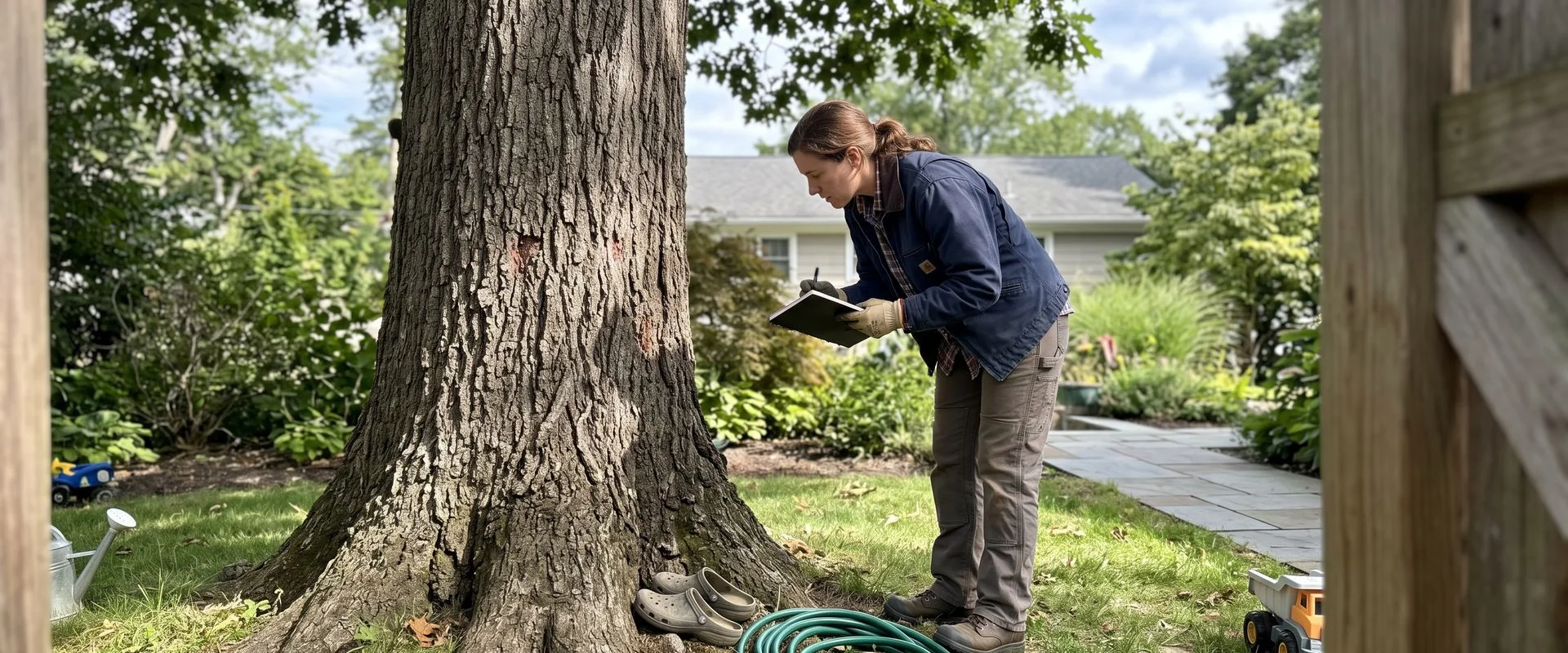
ISA Certified Arborist Serving Westchester County, NY
ISA Certified and TRAQ-qualified arborists for written tree risk assessments, preservation planning, and second opinions across Westchester County.
Last Updated: August 21, 2026
About Our ISA Certified Arborist Service in Westchester
An ISA Certified Arborist is credentialed by the International Society of Arboriculture and holds that certification through continuing education. TRAQ — Tree Risk Assessment Qualification — is a separate ISA credential covering a defined methodology for evaluating tree failure risk. Westchester Tree Pros provides written, methodology-based risk assessments across Westchester County for homeowners deciding whether a tree should be preserved, monitored, or removed, and for property managers who need documented duty of care.
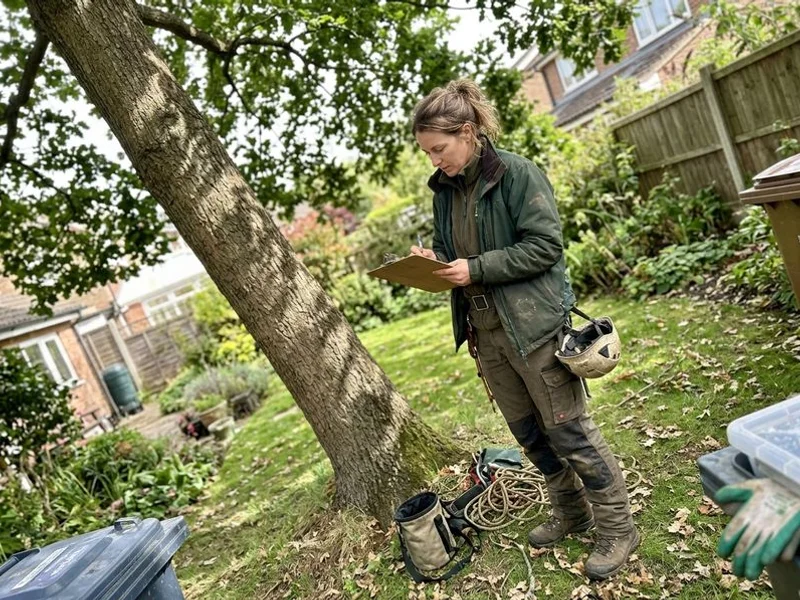
What's Included in Every ISA Certified Arborist Job
- ISA Certified Arborist on site
- TRAQ-qualified tree risk assessment
- Written report with defect, target, and recommendation
- Preservation planning as an alternative to removal
- Documentation suitable for permits and insurers
- Second opinions on removal recommendations
What ISA and TRAQ Certification Mean
An ISA Certified Arborist holds a credential from the International Society of Arboriculture. Earning it requires documented professional experience plus a proctored exam covering tree biology, diagnosis, soil and root systems, pruning standards, and safe work practice. Keeping it requires continuing education units on a recurring cycle, so the credential lapses if the holder stops maintaining it.
TRAQ — Tree Risk Assessment Qualification — is a separate ISA credential with a narrower scope. It certifies training in a specific, repeatable methodology for assessing how likely a tree is to fail, what would be struck if it did, and how severe the consequences would be. The output is a documented rating rather than an impression.
Two things certification is not. It is not a license — licensing is a municipal and county matter, handled separately. And it is not insurance. A company can hold certification without carrying adequate liability coverage, or carry coverage with no certified arborist on staff. Ask about both, separately, and ask to see them.
When You Need an Arborist Rather Than a Tree Service
The distinction is the question you are asking. If a tree is already coming down and you need it done safely, that is removal work, and a competent insured crew is what the job requires.
You want an arborist when the decision itself is what is in question:
- A removal quote you are not sure about. A second opinion costs a fraction of an unnecessary removal, and mature trees are not replaceable on any useful timescale.
- A village permit that requires justification. Where an ordinance restricts removal above a diameter threshold, the application needs a documented arboricultural basis, not a preference.
- A tree that changed after a storm. A new lean, a fresh crack, or soil heaving on one side are findings that need evaluating before the next weather event, not after.
- A property transaction. Large trees near structures are a liability that transfers with the deed, and a pre-purchase assessment prices it.
- Recurring duty of care. On a property with public access or tenants, a documented inspection cycle is the defensible position.
What a Written Tree Risk Assessment Includes
A written assessment is a document, not a verbal recommendation, and it records four things separately.
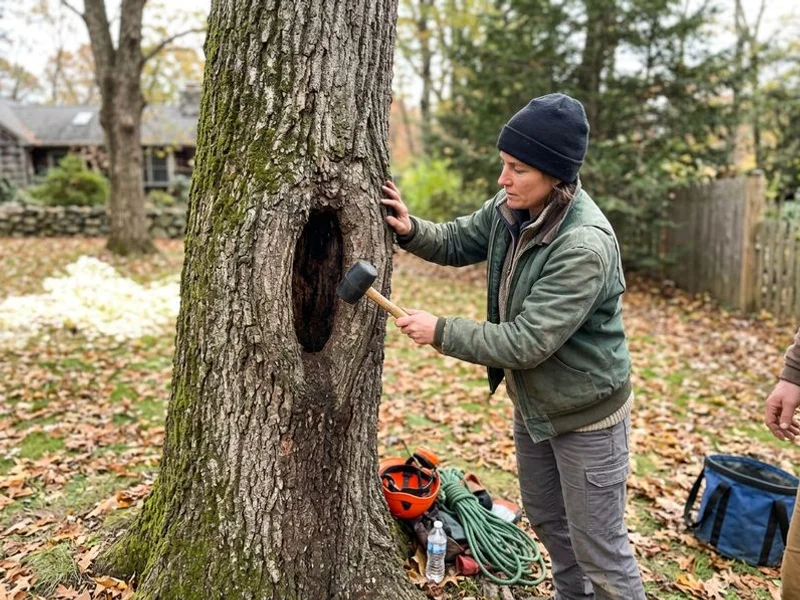
The defect — what is structurally wrong, described specifically: a codominant union with included bark, a trunk cavity, decay at the root collar, a crack through a limb attachment, root-plate movement on the windward side.
The likelihood of failure — how probable that defect is to actually fail, within a defined time frame, under the loading the site sees.
The target — what occupies the space the tree would fall into. This is the input homeowners most often leave out. The same defect over an open lawn and over a bedroom produce very different ratings, because the consequence differs even though the tree does not.
The recommendation and reassessment interval — what to do, and when to look again. Mitigation is not always removal. Crown reduction to lower the load, cabling or bracing to support a weak union, or scheduled monitoring are frequently the proportionate answer.
That document is also what an insurer or a village will want to see. If a tree fails and damages a neighbor’s property, whether the owner knew or should have known about the condition is the question that decides liability — and a dated assessment showing the tree was being actively managed is a materially stronger position than having no record at all.
Certified Arborist in Scarsdale
Scarsdale’s village ordinance restricts removal by trunk diameter and species, which means the arborist’s written finding is often what the permit application rests on. On the estate lots off Heathcote and Quaker Ridge, assessments also tend to run the other direction — documenting that a mature specimen tree can be preserved with a support system rather than removed.
Certified Arborist in Bronxville
The mature beeches, oaks, and Norway maples that give Bronxville its streetscape are individually significant to a village of roughly one square mile. Assessments here weigh preservation heavily, and the written record matters for properties inside the Lawrence Park Historic District, where a removal is rarely a decision the owner makes alone.
Certified Arborist in Larchmont
Long Island Sound exposure makes coastal decline easy to misread. Salt-burned foliage can look alarming on a tree that will recover; a normal-looking crown can sit above a root plate that has already lost anchorage on the windward side. Assessments on Sound-facing Larchmont properties focus on root-plate movement and crown dieback distribution for that reason.
Certified Arborist in Rye
Rye combines shoreline exposure with mature residential canopy, and assessments here frequently follow a storm — evaluating whether a tree that shifted is still sound, and documenting the condition for an insurance claim before any cutting removes the evidence.
Certified Arborist in New Rochelle
Dense residential blocks and older housing stock put large trees close to occupied structures throughout New Rochelle, which raises the consequence side of every risk rating. Assessments on these lots concentrate on what sits inside the failure zone — roofs, driveways, and neighboring property — as much as on the defect itself.
How Our Westchester Tree Service Works
Free On-Site Estimate
A certified arborist assesses the tree, hazards, and access.
Itemized Quote
You get a clear, all-in-one price with no hidden cleanup fees.
Safe Work
OSHA-compliant crew with full insurance handles the work.
Complete Cleanup
We haul debris and leave your property tidy on every job.
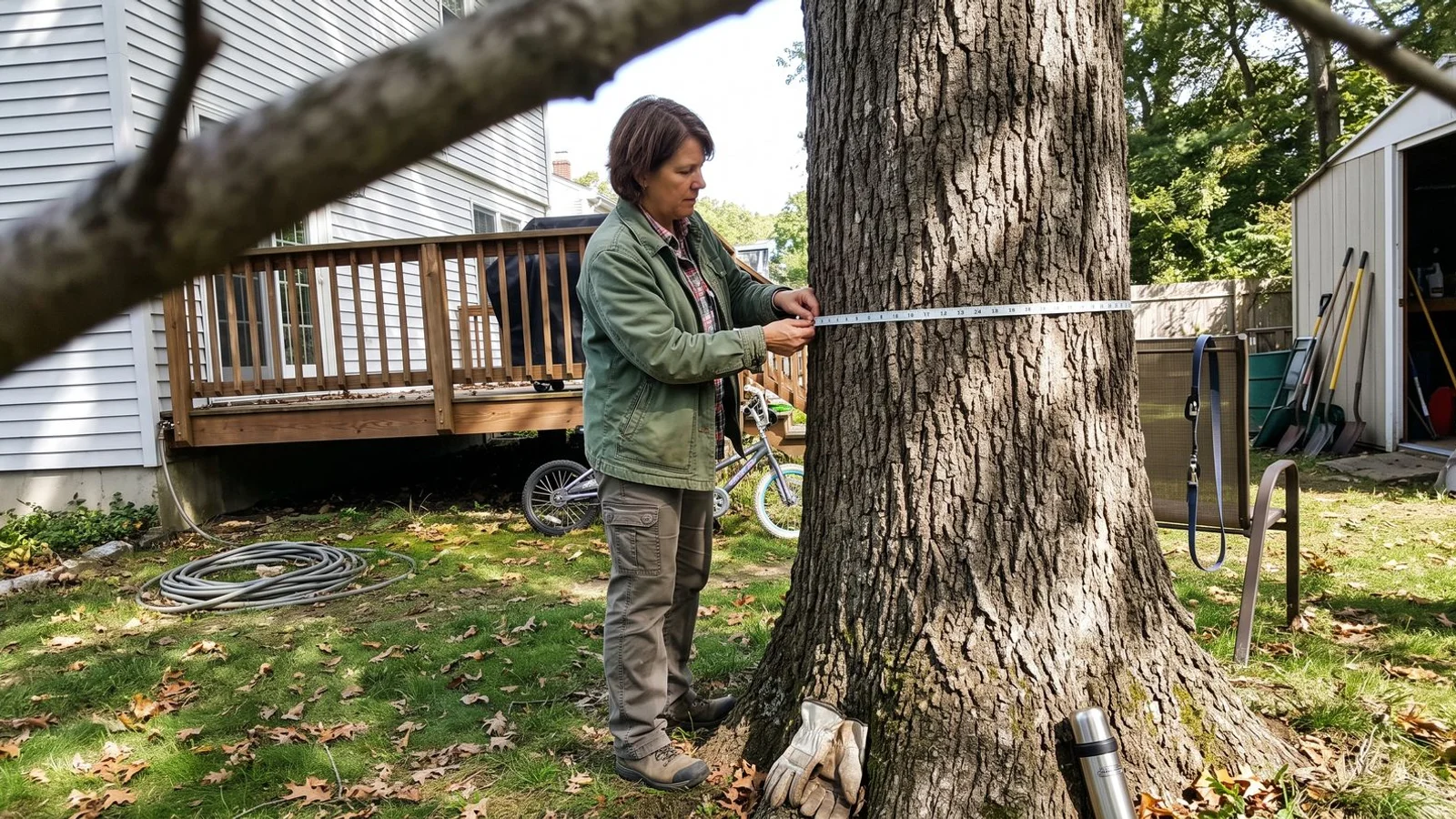
Recent ISA Certified Arborist Projects in Westchester
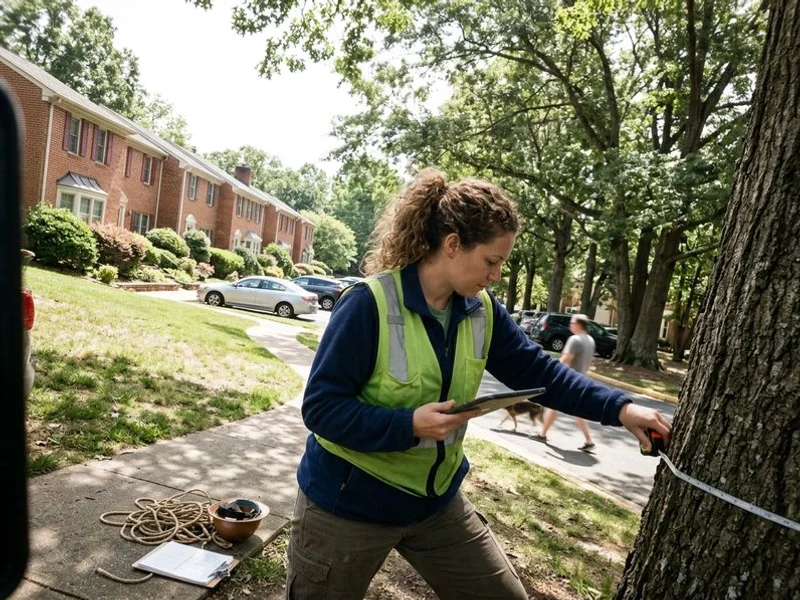
Need Certified Arborist?
Free, on-site estimates across Westchester County. Call 914-907-4131 for an insured, local team that shows up when we say we will.
ISA Certified Arborist Questions Westchester Homeowners Ask
What does ISA Certified Arborist actually mean?
What is TRAQ and how is it different?
When do I need an arborist instead of a tree service?
Is the assessment free?
Will the report satisfy my village permit application?
Other Westchester Tree Services You May Need
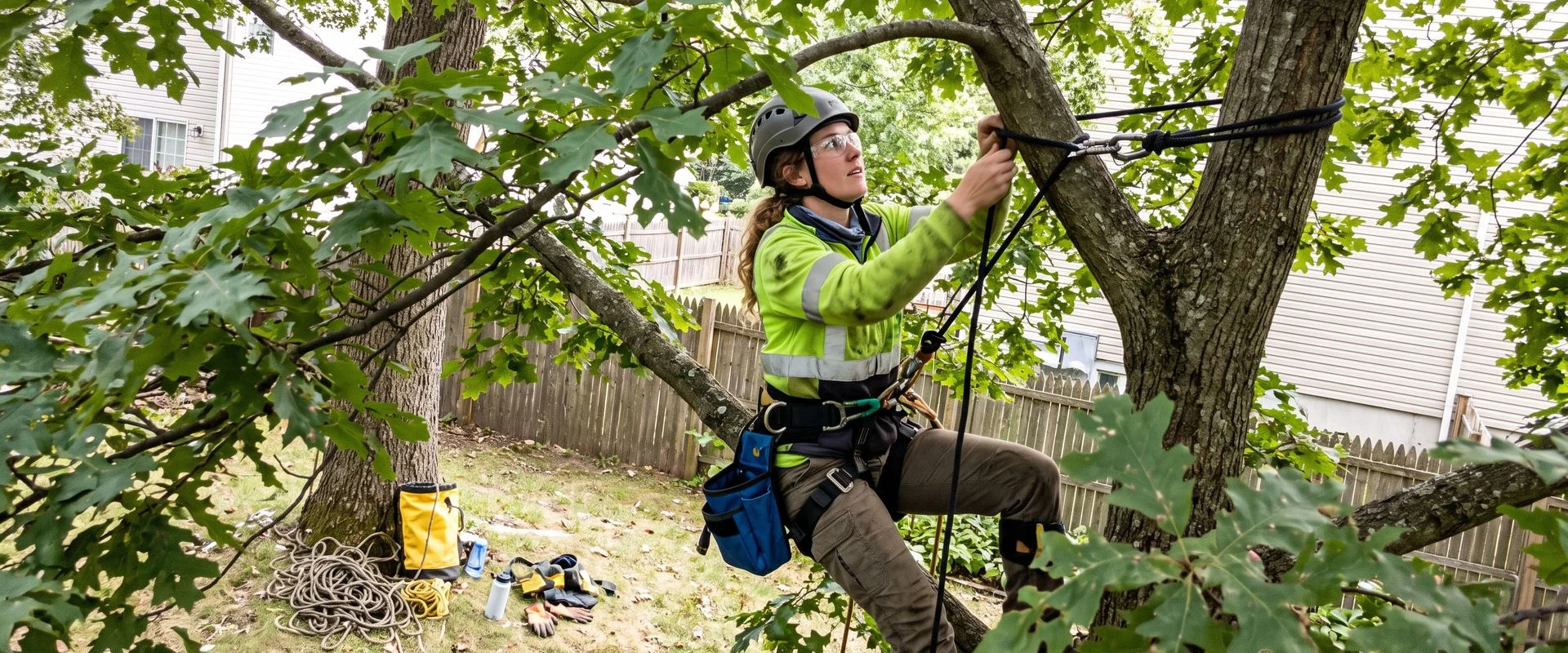
Tree Cabling & Bracing
Structural support using dynamic cabling and static bracing to stabilize weak limbs, split crotches, and co-dominant stems, extending the life of mature trees.
Tree Health Assessments & Disease Diagnosis
On-site evaluations to diagnose disease, pest infestation, and structural risk, with treatment or removal recommendations.
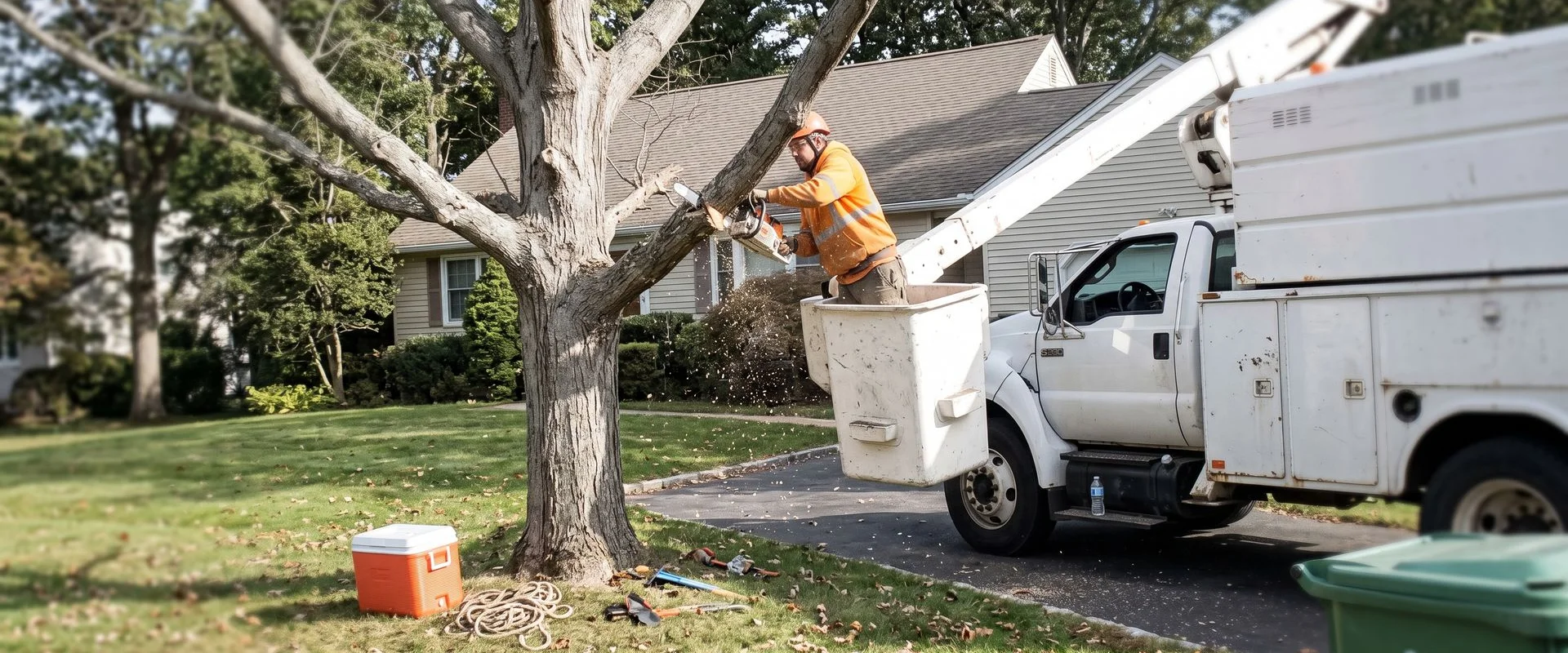
Tree Removal
Safe removal of dead, diseased, storm-damaged, or unwanted trees of any size, including full debris cleanup and hauling.