Common Tree Diseases and Pests in Westchester
Regional tree threats in Westchester — emerald ash borer, oak wilt, spotted lanternfly, beech leaf disease, boxwood blight — with symptoms and when to call an arborist.
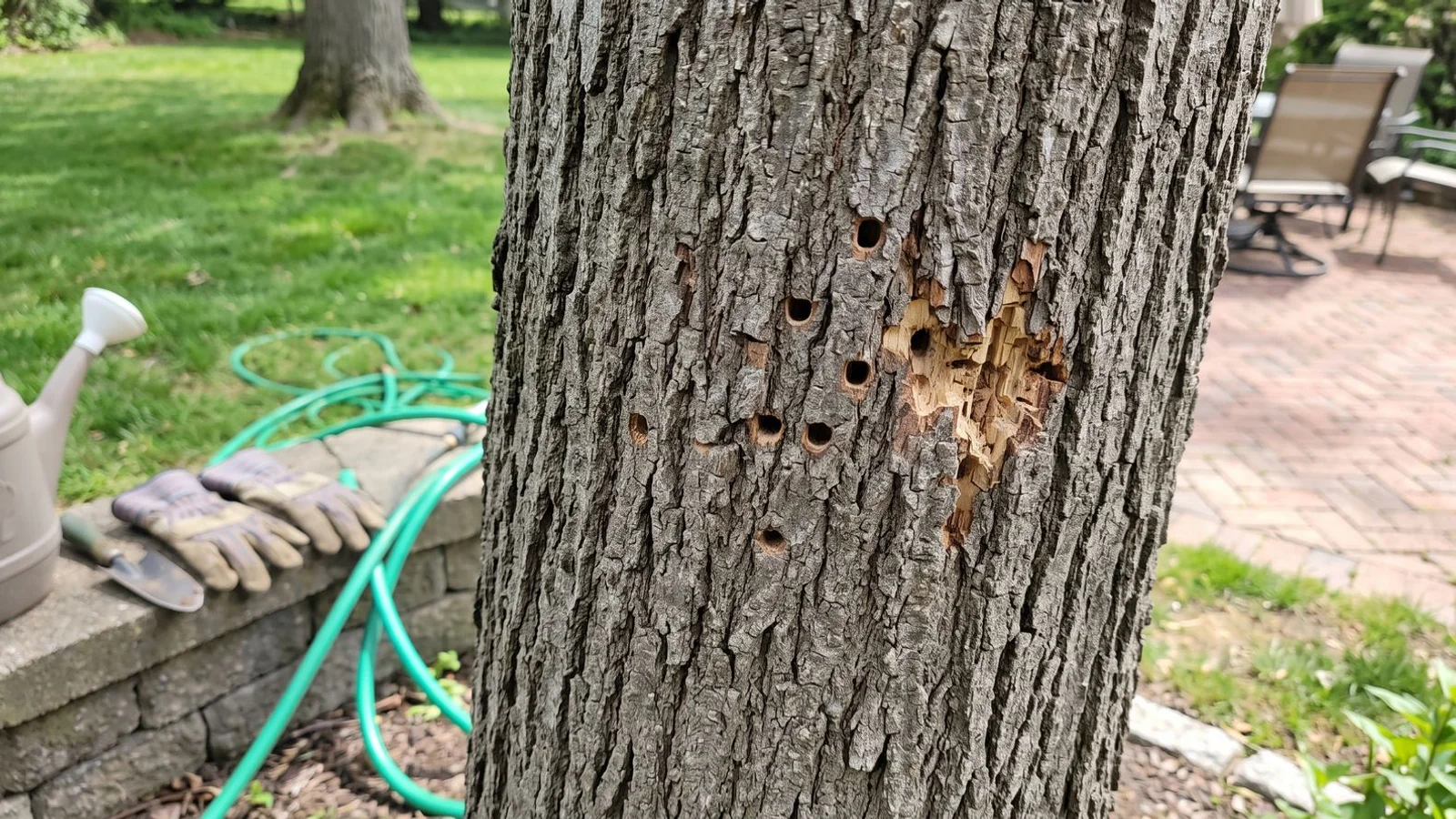
We have noticed a major shift in local tree canopy survival rates across Westchester recently. The dividing line between saving a mature shade tree and losing it completely often comes down to recognizing early warning signs. Understanding the specific tree diseases Westchester NY properties face requires a proactive approach.
The cost of inaction is simply too high for most property owners to ignore.
Our crews see this reality daily when inspecting suburban landscapes. Let’s look at the hard data behind these local outbreaks and explore the practical workarounds available to property owners. This guide will break down the primary biological threats and then outline the exact steps required to manage them effectively.
The Big Threats in Westchester
Regional tree health has changed dramatically in the last decade. The specific tree pests Westchester environments harbor represent immediate dangers to your property value and landscape safety. When symptoms appear, an on-site tree health assessment and disease diagnosis is the fastest way to confirm what you’re dealing with and whether treatment or removal makes sense.
Emerald Ash Borer (EAB)
Target: ash trees (white, green, black ash)
We consider the Emerald Ash Borer the most destructive forest pest in modern New York history. This metallic green beetle larvae feed on the inner bark, disrupting the tree’s ability to transport water and nutrients. Most untreated ash trees in Westchester have already died or are rapidly declining.
The financial impact of this insect is staggering. Removal of a mature, dead ash tree typically costs between $1,800 and $3,600 due to the brittle, dangerous nature of the dead wood. Preventative trunk injections using emamectin benzoate, commonly known as Tree-äge, offer a highly effective alternative. This treatment costs roughly $12 to $16 per trunk diameter inch and provides two years of protection. Learn the specific emerald ash borer signs to watch for so you can act before the damage is irreversible.
Signs:
- D-shaped exit holes in the bark (around 1/8 inch)
- Upper canopy dieback progressing downward
- Bark splitting and peeling
- Heavy woodpecker activity
- S-shaped galleries under the bark
Our team highly recommends reviewing our dedicated emerald ash borer signs guide for detailed photographic examples. Acting quickly at the first sign of canopy thinning is critical.
Oak Wilt
Target: oaks, especially red oak group
This fungal disease blocks the water-conducting vessels of oak trees. Red oaks are particularly vulnerable and can die within a few weeks of infection. The New York State Department of Environmental Conservation (NYS DEC) closely monitors this disease, which spreads through interconnected root systems and sap-feeding nitidulid beetles.
Our certified arborists strictly follow NYS DEC guidelines regarding oak maintenance. You must avoid pruning oaks during the active growing season between April and October. Fresh pruning wounds attract the beetles carrying the deadly fungal spores.
Signs:
- Rapid crown wilt starting from the top
- Bronze or brown leaves in summer
- Leaf drop before fall
- Spread through root grafts and beetles
Status in Westchester: present but not widespread yet. Prevention remains the only truly effective strategy.
Spotted Lanternfly
Target: many hardwoods; prefers tree of heaven (Ailanthus altissima), grapes, and various maples
We are tracking a massive surge in spotted lanternfly populations across the lower Hudson Valley. This invasive sap-sucking insect from Asia severely weakens trees and excretes a sticky honeydew that promotes damaging black sooty mold. During the 2025 and 2026 seasons, Westchester County Parks deployed high-powered commercial vacuums to manage large congregations of these pests in public spaces.
The Cornell Cooperative Extension explicitly warns homeowners against using internet remedies like kitchen vinegar, which damage the soil and fail to control the insects. Standard management requires specialized insecticides or physical removal methods like circle traps.
Signs:
- Colorful nymphs (black with white spots, later red with black stripes)
- Adults with red hindwings, spotted forewings
- Honeydew (sticky substance) and sooty mold on trunks
- Egg masses (grey putty-like patches) on trunks in fall
Status in Westchester: established and spreading. Report new sightings to the NYS DEC immediately.
Beech Leaf Disease
Target: American beech
This devastating condition is caused by a microscopic nematode known as Litylenchus crenatae mccannii. The worms attack the buds and burrow into the cells of newly forming leaves, destroying the tree’s ability to photosynthesize. Local 2025 data confirms that this disease can kill a mature American beech in just six to ten years.
Our plant health care experts have seen this nematode spread rapidly through Westchester since its initial local discovery in 2019. While no guaranteed cure exists for forest settings, systemic treatments on ornamental European beeches show promising early results.
Signs:
- Dark bands between leaf veins visible when the leaf is held to the light
- Leaves becoming leathery and cupped
- Progressive defoliation over years
- Tree decline and death
Status in Westchester: rapidly spreading. Most affected beeches in the county are currently declining.
Boxwood Blight
Target: boxwood shrubs
We encounter this aggressive fungal infection constantly in formal residential landscapes. Boxwood blight causes rapid, severe defoliation and can quickly ruin expensive foundational plantings. The disease thrives in warm, humid weather and spreads easily via contaminated pruning tools.
Professional management often requires targeted applications of chlorothalonil-based fungicides. For new installations, planting resistant cultivars like the NewGen series offers the best long-term defense against this pathogen.
Signs:
- Dark leaf spots
- Black stem lesions
- Rapid defoliation
- Death of stems
Status: common in Westchester landscapes. Strict sanitation of garden tools is critical to stop the spread.
Root Rot (Armillaria)
Target: many species, especially stressed trees
This opportunistic fungus attacks the root systems of trees already weakened by drought, construction damage, or other pests. Armillaria mellea is commonly called shoestring rot because it produces dark, string-like rhizomorphs that spread through the soil. Once the white fungal mats appear under the bark at the root flare, the tree is typically structurally compromised.
Our crews often find this decay during post-storm cleanups where seemingly healthy trees have suddenly uprooted. Maintaining vigorous tree health through proper watering and mulching is the primary defense.
Signs:
- Mushroom clusters at the base
- White fungal mat under bark at root flare
- Progressive dieback
- Sudden failure of the tree
Status: common on older, stressed trees across Westchester.
Symptoms That Warrant a Call
Early detection of any tree health issue dramatically increases the chances of successful treatment. Ignoring subtle changes in your landscape often leads to hazardous conditions and expensive removals. A prompt professional evaluation provides clarity and actionable solutions.
Our diagnostic process focuses on identifying the root cause rather than just treating the visible symptoms. You should monitor your property for these specific warning signs:
- Unexplained canopy dieback progressing over months
- Bark peeling in sheets exposing wood
- Fungal fruiting bodies on trunk or roots
- Small round or D-shaped holes in the bark
- Heavy woodpecker damage on a tree that looked healthy
- Sudden lean or root heave
- Leaves discoloring off-season
Any of these visual cues suggests a health assessment is highly warranted. Early intervention often saves property owners hundreds of dollars in eventual removal costs.
What an Assessment Includes
A thorough health evaluation goes far beyond a simple visual glance from the driveway. Certified arborists credentialed by the International Society of Arboriculture (ISA) use specific protocols to evaluate both the biological health and structural integrity of the plant. This detailed inspection provides the data needed to make an informed financial decision.
We charge between $150 and $500 for a comprehensive written report. This fee is a fraction of the cost associated with repairing property damage caused by a neglected, falling tree. The formal assessment process involves several distinct phases.
| Assessment Stage | Specific Actions Performed |
|---|---|
| Species & Site ID | Identifying the exact tree species and analyzing soil compaction, drainage, and local environmental stressors. |
| Symptom Evaluation | Inspecting the root flare, trunk, branches, and foliage for signs of decay, structural defects, or discoloration. |
| Pathogen Testing | Taking soil or tissue samples for laboratory analysis if a specific microscopic fungus or nematode is suspected. |
| Actionable Strategy | Delivering a concrete recommendation for targeted treatment, ongoing monitoring, or safe mechanical removal. |
Treatment vs. Removal
Deciding whether to save or remove a tree requires balancing the emotional value of the landscape with hard financial realities. Some diseases and pests are treatable if caught during the early stages of infestation. Once a tree loses more than 30% of its canopy, structural failure becomes a severe safety risk, making treatment unviable.
Our general approach prioritizes preservation whenever scientifically and economically feasible. Compare the expected outcomes before making a final choice on your property.
| Pest or Disease | Treatment Viability | Alternative Action |
|---|---|---|
| Emerald Ash Borer | High success with trunk injections if canopy loss is under 30%. | Removal costs $1,800+ for mature trees. |
| Boxwood Blight | Moderate success via sanitation and strict fungicide schedules. | Remove and replace with resistant cultivars. |
| Oak Wilt | Mostly prevention based. Treatment options remain very limited. | Immediate removal to protect nearby oaks. |
| Beech Leaf Disease | No effective forest cure yet. Some ornamental treatments show promise. | Monitor closely and remove dead wood. |
| Spotted Lanternfly | High success using physical removal and targeted pesticides. | Trapping and vacuuming heavy infestations. |
For untreatable or advanced cases, removal is the safest path. Leaving dead wood standing near structures creates an unacceptable liability for property owners.
Prevention
Protecting your landscape investment starts with proactive cultural practices and strict adherence to local environmental regulations. Many of the most destructive forest pathogens move rapidly through human activity rather than natural migration. Simple changes to your seasonal yard maintenance routine yield massive long-term benefits.
We encourage property owners to implement these fundamental protective measures:
- Don’t move firewood. The NYS DEC strictly prohibits moving untreated firewood more than 50 miles from its source to prevent the spread of EAB and the Asian Longhorned Beetle.
- Prune oaks in dormant season only. Restrict all oak pruning to the winter months to avoid attracting the beetles that carry oak wilt.
- Check nursery stock. Inspect all new plants and soil for pests or egg masses before introducing them to your garden.
- Monitor your trees. Routine visual inspections catch early warning signs before diseases become terminal.
For professional assistance or an expert assessment, call 914-907-4131 or fill out our contact form.
Related reading on maintaining your landscape safely: emerald ash borer signs, and when to call a certified arborist.