When to Call a Certified Arborist for a Tree Inspection
The trigger signs that warrant a certified arborist inspection, what an assessment covers, TRAQ risk rating, and how an arborist differs from a tree cutter.
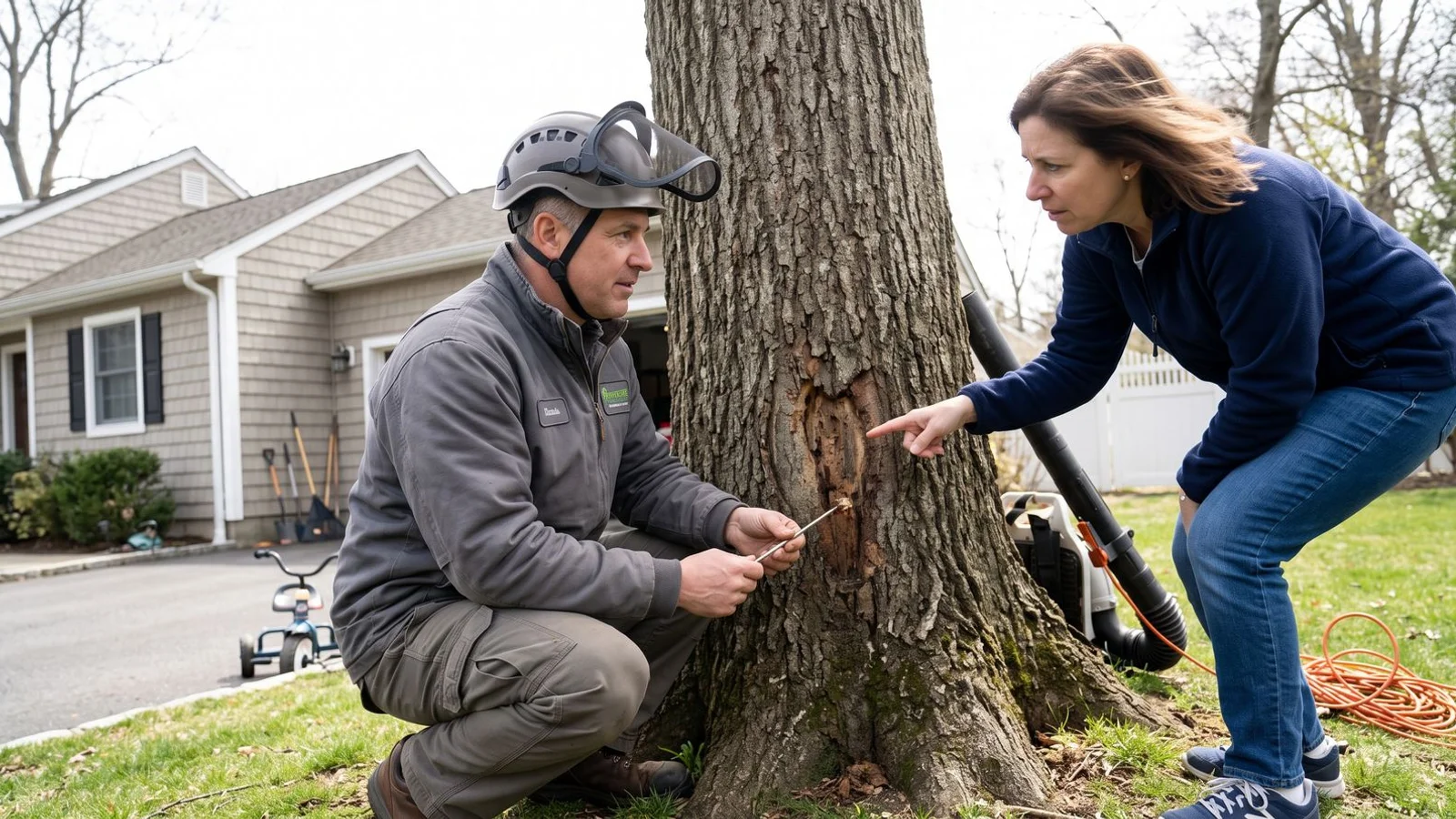
Trigger Signs That Warrant a Call
Structural:
- New lean (compared to a year ago)
- Vertical cracks in the trunk
- Hollow-sounding cavity when tapped
- Root heave — lifted soil on one side
- Split crotch or weak co-dominant leader
Health:
- Unexplained canopy dieback progressing over months
- Bark peeling in sheets
- Fungus fruiting at the base or on the trunk
- D-shaped exit holes (possible EAB on ash)
- Woodpecker activity on a previously healthy tree
- Progressive leaf discoloration
Situational:
- Before a big removal decision (is it really necessary?)
- After a storm that stressed but didn’t fell the tree
- Pre-purchase property inspection
- HOA / commercial portfolio risk documentation
- Neighbor’s tree overhanging your property, and you’re wondering
What a Certified Arborist Assessment Includes
- Visual inspection of trunk, roots, canopy, and setting
- Sounding test with a rubber mallet on suspect areas
- Species identification and biology-informed analysis
- Structural evaluation — cracks, cavities, unions, root flare
- Pest and disease assessment — visual signs, potential sampling
- TRAQ risk rating — Tree Risk Assessment Qualification methodology
- Written report with observations, rating, and recommendation
What TRAQ Actually Is
Tree Risk Assessment Qualification is the ISA’s structured methodology for evaluating tree failure risk. It considers:
- Likelihood of failure — how likely is this tree to fail?
- Likelihood of hitting a target — if it fails, what’s the fall path and target occupancy?
- Consequences — what happens if it hits the target?
Combined, it produces a risk rating: low, moderate, high, or extreme.
That rating is actionable. Low-risk trees you monitor. Moderate-risk trees you mitigate (pruning, cabling). High and extreme you address urgently.
Arborist vs. Tree Cutter
Not all tree companies are the same. A certified arborist:
- Passed the ISA certification exam
- Continues education to maintain certification
- Trained in diagnosis, preservation, and removal
- Can recommend not removing a tree
A tree cutter with no arborist certification:
- May be skilled at cutting
- Isn’t necessarily trained in diagnosis
- Is only paid when they cut
- Has misaligned incentives on preservation-vs-removal decisions
Both can do removals. Only certified arborists should be doing diagnostics and preservation planning on high-value trees.
Cost
- Free removal estimate (visual assessment for a job you already know you want): $0
- Basic health check (visual assessment with verbal recommendation): $0 as part of any estimate
- Written diagnostic report ($150–$500): comprehensive TRAQ assessment with written documentation
For casual homeowner questions, a free removal estimate is usually enough. For high-value trees where you’re deciding between preservation and removal, invest in the written report.
Signs You Need the Written Report
- Tree is valued (specimen, mature, historically significant)
- You’re getting conflicting opinions from different tree companies
- Insurance or legal documentation is needed
- HOA or property management portfolio requires it
- You’re considering treatment that costs real money
Booking
Call 914-907-4131 or use the contact form. Tell us it’s a diagnostic assessment (not a removal estimate) if that’s what you’re after.
Related: tree health assessment service, signs a tree is dangerous, common tree diseases in Westchester.